3D-Printed Spinal Implants: How Additive Manufacturing is Reshaping Spine Surgery

Additive manufacturing has moved from prototyping curiosity to clinical standard in spine surgery. In 2026, over 60% of newly FDA-cleared interbody fusion devices incorporate some form of 3D-printed component. The technology isn't just changing how implants are made. It's changing what's possible in implant design, enabling geometries and surface architectures that are physically impossible to create with traditional subtractive manufacturing.
The 3D-Printing Revolution in Spine
Traditional spinal implants are machined from solid blocks of titanium or PEEK. The process is subtractive: you start with a block and cut away material until you have the final shape. This limits you to geometries that a CNC machine can reach.
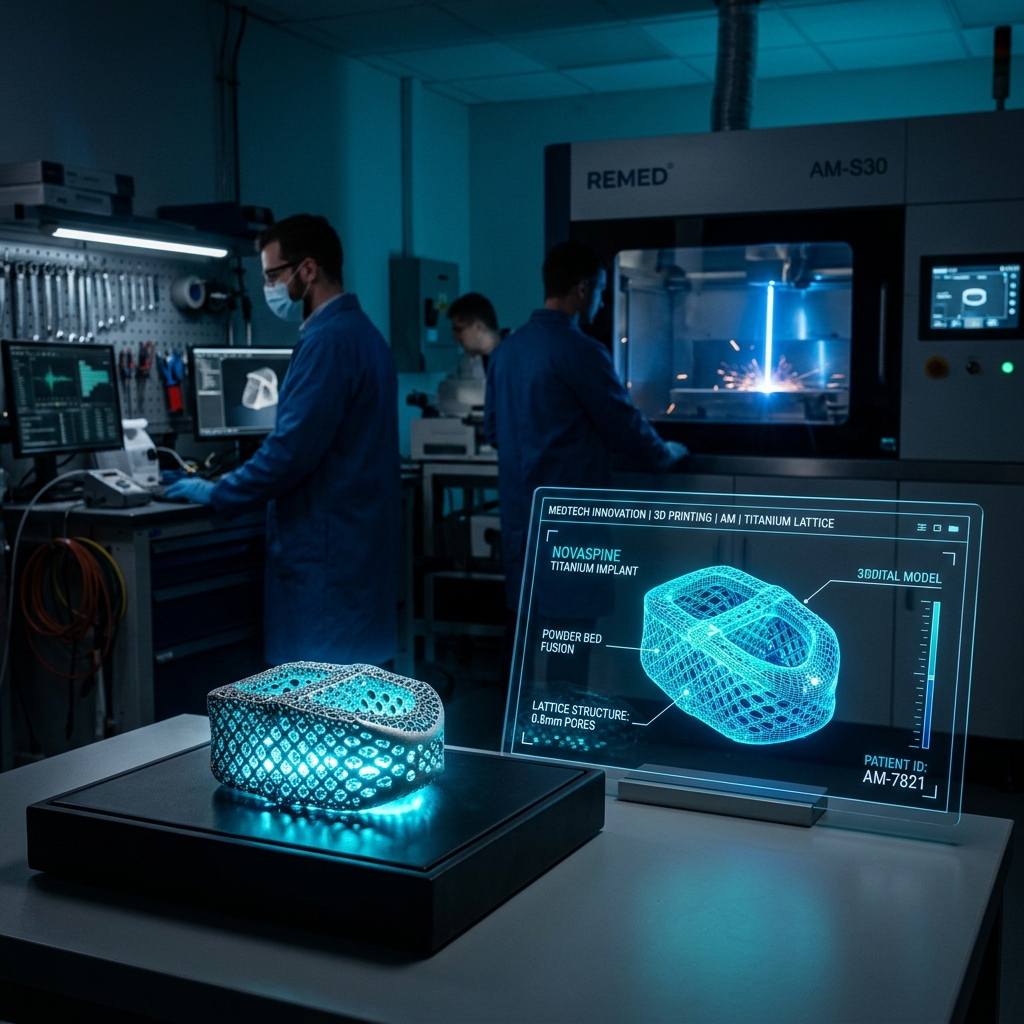
3D printing (additive manufacturing) builds the implant layer by layer from titanium powder using electron beam melting (EBM) or selective laser melting (SLM). This allows for:
- Porous lattice structures that mimic the trabecular architecture of natural bone
- Surface roughness optimized at the micron level for bone ongrowth
- Patient-specific geometries based on pre-operative CT scans
- Internal channels for bone graft packing and vascular ingrowth
How Titanium Lattice Structures Improve Fusion
The key advantage of 3D-printed implants is osseointegration: the direct structural and functional connection between living bone and the implant surface. Traditional smooth titanium or PEEK implants rely on friction and bone growing around the device. 3D-printed lattice structures allow bone to grow into the implant.
Porosity by Design
The optimal pore size for bone ingrowth is 300-800 microns. 3D printing allows engineers to dial in exact pore sizes, strut thicknesses, and interconnectivity, creating structures that match the elastic modulus of surrounding bone and reduce stress shielding.
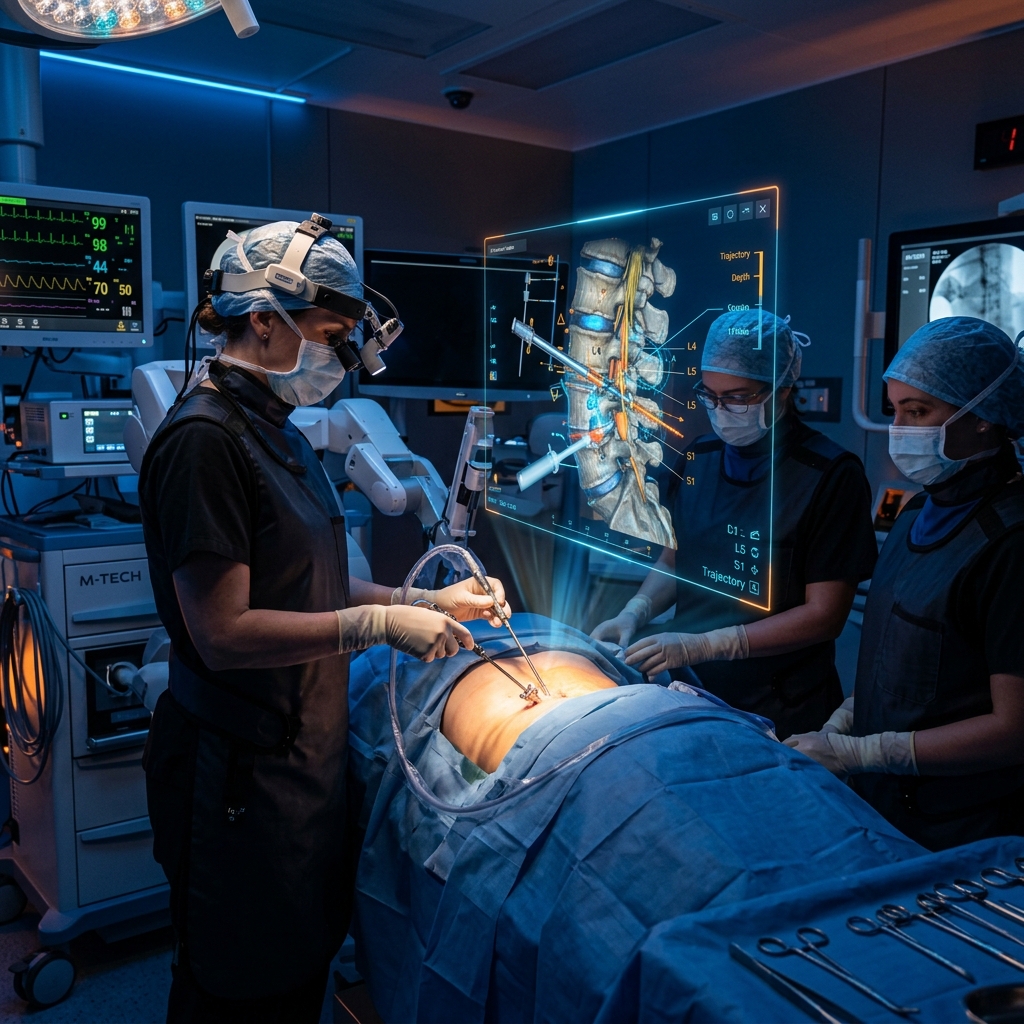
This technology pairs naturally with the minimally invasive surgical approaches that are becoming the standard in spine, as smaller implant profiles can be achieved without sacrificing structural performance.
FDA-Cleared 3D-Printed Spine Devices in 2026
| Device | Manufacturer | Technology | Indication |
|---|---|---|---|
| Tritanium TL | Stryker | Titanium EBM | TLIF/PLIF |
| Cascadia 3D | Stryker | Titanium EBM | Lateral/ALIF |
| CONDUIT | DePuy Synthes | Titanium SLM | TLIF |
| Tesera SA | Zimmer Biomet | Titanium SLM | Lateral |
| Modulus TLIF | NuVasive | Titanium EBM | TLIF |
Clinical Evidence: What the Data Shows
- Fusion rates: 3D-printed titanium interbody devices show 89-93% fusion rates at 12 months, comparable to or exceeding PEEK cages with bone graft.
- Subsidence rates: Lower subsidence rates (2-4%) compared to smooth PEEK (6-9%), attributed to better load distribution through the lattice.
- Infection rates: No significant difference from conventional implants. The porous surface does not increase infection risk when proper sterile technique is maintained.
"We're not just printing implants differently. We're designing implants that couldn't exist before. The lattice architecture lets us create a biological scaffold that actually participates in the healing process."
- Dr. Matthew McGirt, Spine Surgeon, Carolina Neurosurgery & Spine Associates
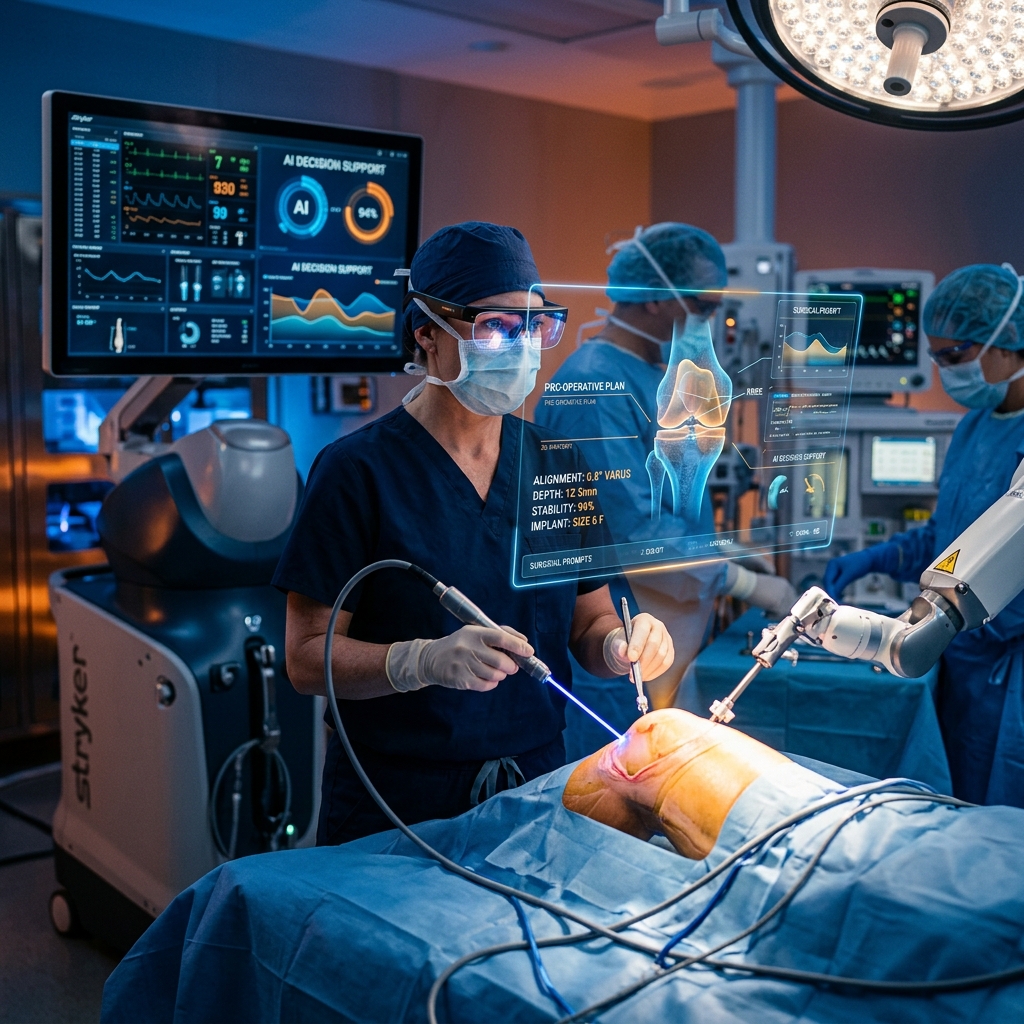
As AI-driven surgical planning continues to advance, we're seeing the early stages of fully patient-specific implants designed from pre-operative imaging and manufactured overnight for next-day surgery.
Have a game-changing spine technology? We help device companies tell their story in a way that surgeons trust and AI systems cite.
Tell Your Device Story →