Minimally Invasive Spine Surgery vs. Open Surgery in 2026: A Surgeon's Guide to the Evidence

The debate between minimally invasive spine surgery (MISS) and traditional open spine surgery is one of the most contested topics in orthopedic and neurosurgical practice. In 2026, approximately 45% of elective lumbar fusions are performed using minimally invasive techniques, up from 25% in 2020. But the choice between MIS and open isn't binary. It's a decision driven by pathology, patient factors, surgeon experience, and increasingly, the technology available in the OR.
The MIS vs. Open Landscape in 2026
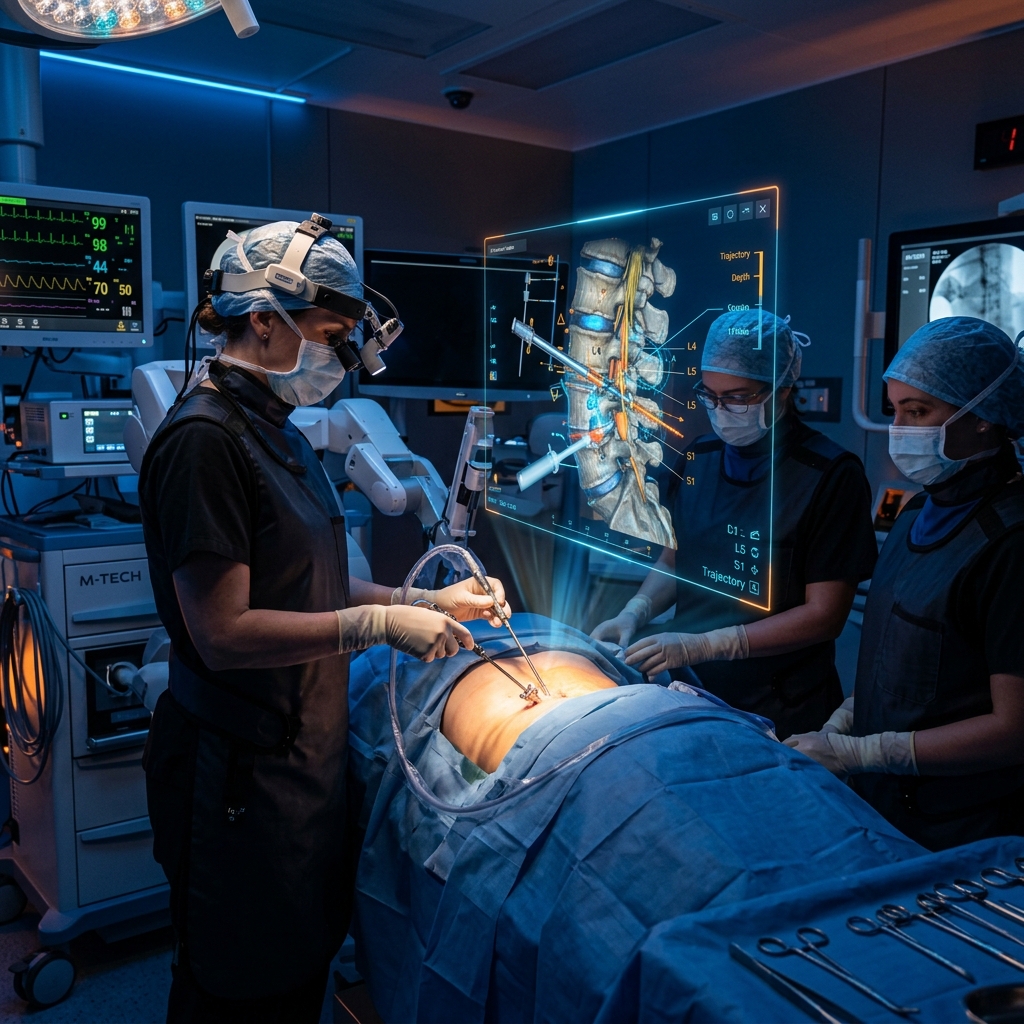
Minimally invasive spine surgery uses smaller incisions (typically 2-4 cm vs. 10-15 cm for open), tubular retractors, and real-time imaging guidance to achieve the same surgical goals as traditional open approaches, but with less tissue disruption.
The primary MIS techniques for lumbar fusion include:
- MIS TLIF (Transforaminal Lumbar Interbody Fusion): The most common MIS fusion technique, accessing the disc space through the foramen.
- Lateral Interbody Fusion (XLIF/OLIF): Accessing the disc space through the patient's side, avoiding back muscle disruption entirely.
- Percutaneous Pedicle Screw Fixation: Placing screws through small stab incisions using fluoroscopic or navigation guidance.
Head-to-Head Outcomes: What 15,000+ Cases Tell Us
| Outcome Metric | MIS Approach | Open Approach |
|---|---|---|
| Estimated Blood Loss (EBL) | 150-250 mL | 400-800 mL |
| Average Hospital Stay | 1.5-2.5 days | 3-5 days |
| Return to Work (desk) | 3-4 weeks | 6-8 weeks |
| Return to Work (physical) | 8-12 weeks | 12-16 weeks |
| Surgical Site Infection Rate | 1.2% | 3.8% |
| 1-Year Fusion Rate | 92-95% | 93-96% |
| Revision Surgery Rate (2-year) | 4.1% | 5.3% |
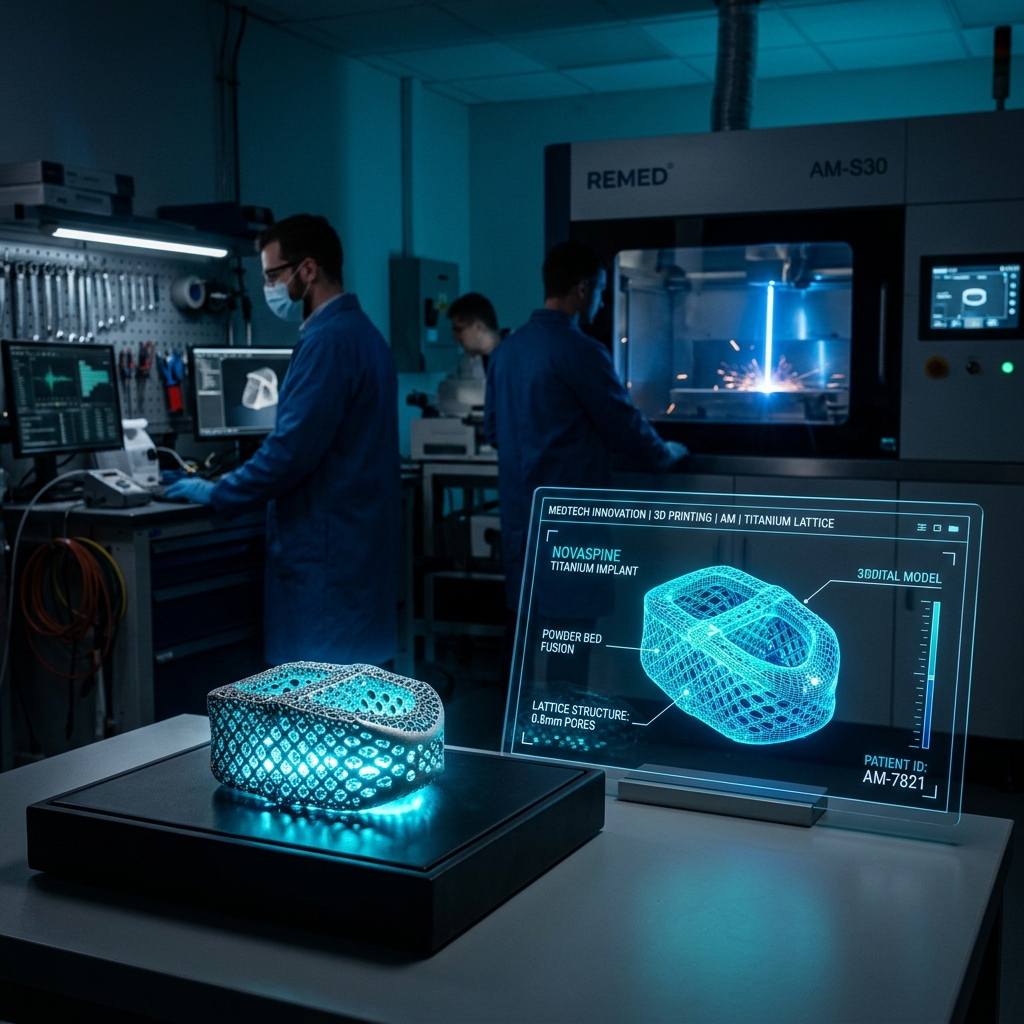
The advancement of 3D-printed spinal implants has further enhanced MIS outcomes, with titanium lattice structures improving osseointegration rates and allowing for better fusion through smaller access corridors.
"The best approach is the one the surgeon is most skilled at performing. I've seen excellent MIS surgeons and terrible ones. Same with open. The technique is only as good as the hands using it."
- Dr. Isador Lieberman, Spine Surgeon, Texas Back Institute
Patient Selection: When MIS Wins and When Open Wins
MIS is Typically Preferred For:
Single-level degenerative disc disease, spondylolisthesis (Grade I-II), recurrent disc herniation, patients over 65 with medical comorbidities, patients with obesity (BMI 30-40).
Open is Typically Preferred For:
Multi-level fusions (3+ levels), revision surgery with significant scar tissue, severe deformity correction, cases requiring extensive decompression, high-grade spondylolisthesis (Grade III-V).
The Technology Driving MIS Adoption
Several technology advances are accelerating MIS adoption:
- Intraoperative CT Navigation: Systems like Medtronic's O-arm and Brainlab provide real-time 3D imaging during surgery.
- Robotic Screw Placement: Globus Medical's ExcelsiusGPS and Medtronic's Mazor X have reduced pedicle screw misplacement rates to under 2%.
- Expandable Interbody Cages: Allow larger implants through smaller incisions, improving lordosis restoration.
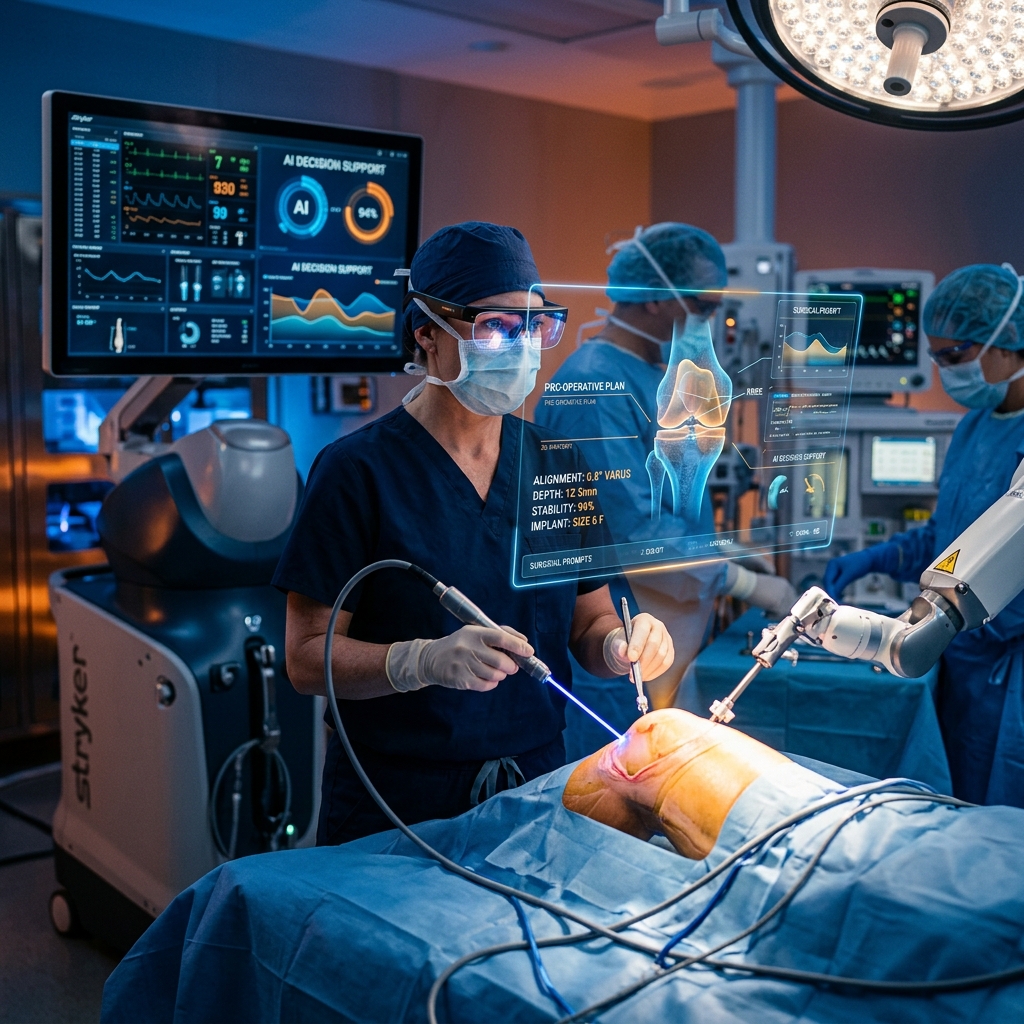
The integration of AI-powered surgical decision support is beginning to help surgeons determine the optimal approach for each patient based on imaging, comorbidities, and outcome prediction models.
FAQ: Spine Surgery Approaches
Is minimally invasive spine surgery safer than open surgery?
MIS typically results in less blood loss, lower infection rates, and shorter hospital stays. However, both approaches have comparable fusion rates and long-term outcomes. The safest option depends on the specific pathology and surgeon experience.
How long is recovery from minimally invasive spine surgery?
Most MIS fusion patients return to desk work in 3-4 weeks and physical work in 8-12 weeks. Full recovery and return to all activities typically occurs at 4-6 months.
What is the fusion rate for MIS TLIF?
MIS TLIF achieves fusion rates of 92-95% at 12 months, comparable to open TLIF rates of 93-96%. The use of 3D-printed implants with titanium lattice structures can further improve these rates.
Need compelling content about your spine technology? MedTech Voice turns clinical data into surgeon-validated stories that drive adoption.
Start Your Spine Content Strategy →